




OVERVIEW
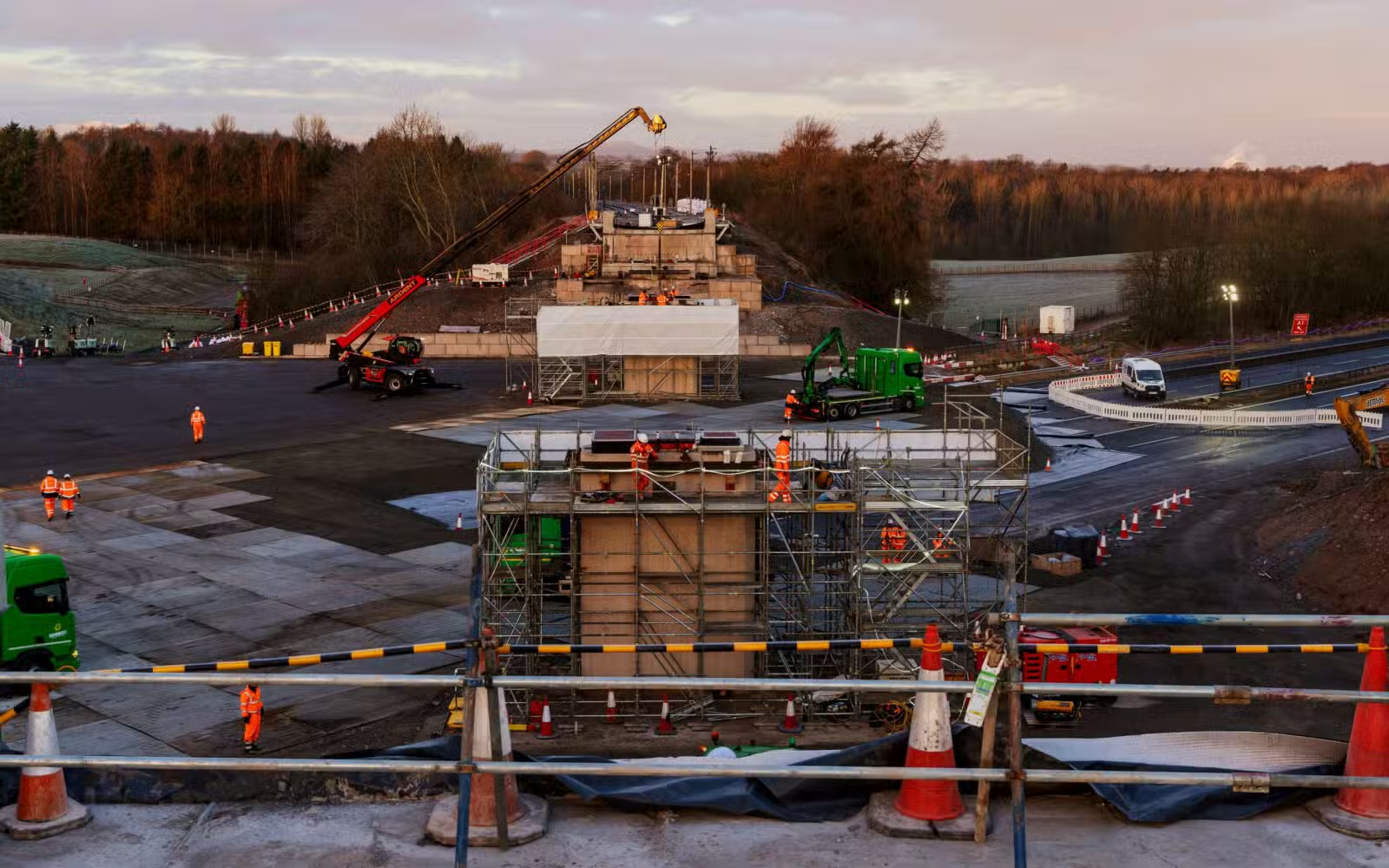
The West Coast Main Line (WCML) is one of the most important railway corridors in the UK, linking the north of England with Scotland. As part of a major infrastructure upgrade, Network Rail was tasked with replacing the ageing Clifton railway bridge over the M6 motorway with a new steel structure designed to improve reliability and reduce journey times. During the first two weekends of 2026, the motorway was fully closed between Junctions 39 and 40 to enable Network Rail and its principal contractor, Skanska UK, to safely demolish and replace the existing bridge.
CREATE’S ROLE
We were appointed in February 2025 to support Skanska UK with water management and flood risk matters associated with the demolition and replacement works. Our Water & Flood Risk team’s primary task was to prepare technical assessments and documentation to support regulatory permits and enable environmentally compliant construction-phase operations.
Working with Skanska and Network Rail, we focused on ensuring that temporary works could be safely implemented without increasing flood risk or environmental harm to adjacent watercourses and land. Our technical input was essential to meeting Environment Agency (EA) permit requirements and facilitating the controlled discharge of surface water from the works.
Our roles, technical services and outputs included:
- Flood Risk Assessment (FRA)
- Environment Agency Permit Documentation
- Discharge of Water Permit (DoWP) applications
- Temporary works drainage and water management strategy
- Site layout and flood risk modelling advice
- Risk Assessment for fluvial, surface water and groundwater flooding
CHALLENGES
The site for the works compound was located on greenfield land adjacent to the West Coast Main Line within the jurisdiction of Westmorland & Furness Unitary Authority – acting as both the Lead Local Flood Authority and Local Planning Authority. This required careful assessment of multiple flood risk sources, including fluvial, surface water and groundwater, in the context of temporary construction activities. Ensuring that drainage, environmental protection and climate change allowances were fully considered was critical to securing regulatory compliance and enabling the works to proceed on a tightly controlled programme.
ACHIEVEMENTS AND BENEFITS
Our technical input helped ensure that environmental risk, regulatory compliance, and flood resilience were fully addressed across the construction phase of this infrastructure upgrade. The Flood Risk Assessment and supporting documentation formed an integral part of the Environment Agency permit applications, enabling Skanska to progress works on schedule and with confidence that surface water discharges and flood risk were being appropriately managed. This support contributed to the successful delivery of the overall rail bridge replacement project.
TESTIMONIAL
“I found Create, Claire and Tracey, to be very helpful, informative and flexible working with the changes in design as and when they became apparent. Your added assistance for the EIA scoping was also very welcome, and I believe was a critical step in allowing the project to start on time to ensure the blockade could be met.”
Michael Greenwood, Assistant Environmental Sustainability Manager at Skanska UK


